Vanguard Industries intranet
Replacing the HR walk-up desk with a self-service site in English and Spanish.
A self-service intranet that lets warehouse and office employees find answers without walking to the HR office, in English and Spanish, now maintained by HR.
- Role
- UX researcher, designer, and developer. I made the design decisions; HR approved the content structure.
- Team
- Me, my manager (security, hardware, and access), HR from both locations, and the office manager.
- Timeline
- Employee survey in December 2024; project put on hold, then restarted June to August 2026.
- Tools
- WordPress, a custom plugin for the AI assistant, a site map, and hand-drawn low-fidelity prototypes.
The challenge
Employees got information by walking into the HR office, because the old intranet was outdated, did not separate information by location, and was not usable for Spanish speakers. Several facts about the people using it shaped everything that followed:
- Only about 25% of employees have access to a computer, because most of the company works in the warehouse.
- Most employees speak Spanish and limited English.
- The company has two locations in different states, with different information.
- This was a fill-in project while we waited on another project, so time and priority were limited.
The research
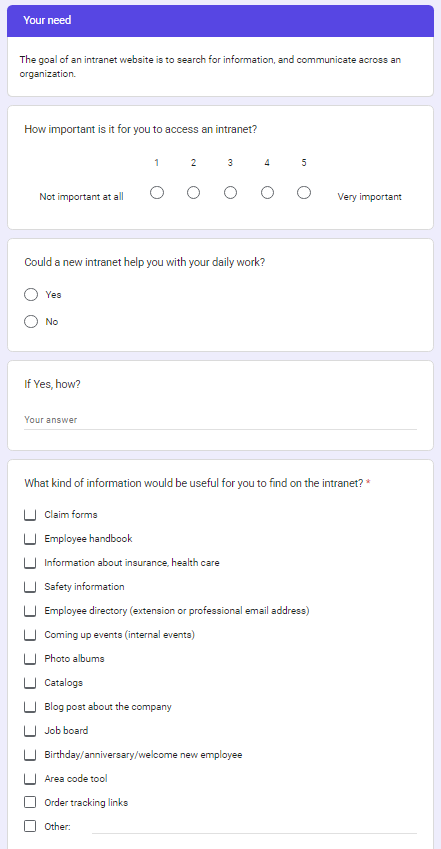
Survey
I sent an anonymous three-part survey to the company’s roughly 250 employees by email with managers’ support, displayed it in the break rooms with a QR code, and followed up in person. I received 25 replies (about 10%) from sales reps, a promotions manager, warehouse employees, and managers. It asked whether they knew the intranet existed and how they heard about it; what they had used it for and how relevant it was to their work; and how important an intranet is to them and what information they would want to find. It mixed closed questions with open-ended suggestions.
Stakeholder interviews
I interviewed three stakeholders: the office manager and HR.
Key findings
- Employees depended on HR in person for answers they could not find online.
- 80% of survey respondents knew the intranet existed.
- Employees mainly used it, or wanted it, for claim forms, the employee handbook, and company events and photos.
- The content was out of date, not separated by location, and not usable for Spanish speakers.
Limits of the research
The survey reached fewer warehouse employees than I hoped, even though I teamed up with their manager, put the QR code in the break room, and followed up in person. Because warehouse employees are most of the company, I treated the survey as only part of the picture and used HR’s knowledge of what warehouse employees ask for to fill the gap. When the project restarted, I added individual interviews to get more specifics, but I could not get interviews with warehouse employees.
How the research shaped the design
Reaching people without a computer
HR requested a computer station in the break room so warehouse employees could use the site during breaks. Because the station is shared, I designed the assistant to forget the previous conversation quickly, so one person’s questions do not carry over to the next.
Designing for Spanish speakers
The site can be translated into both languages, and documents are uploaded in both English and Spanish. I treated this as an accessibility requirement, not an extra.
Two locations, one site
Pages are divided into sections by location, and each location’s content lives in its own folder, so employees see the right information and HR can update each location separately.
Zoom and visual impairment
Testing by the company CEO showed that the site did not hold up for employees with visual impairments, who increase zoom and font size in their desktop setup instead of using browser zoom. I reproduced the problem, then adapted the content and layout so the site stays usable when zoomed and still looks good.
A structure built from real content
After researching what intranets usually include, I built the site map and navigation from the survey results, the previous intranet, and my interviews with HR. The office manager then checked that every piece of content had a place in the structure, and HR approved it.
Replacing the walk-up question
The goal was for the intranet to take over the questions people used to bring to the HR office, so I added an assistant in the search bar. I designed it to be trustworthy: it answers only from the company’s own documents, says so when it does not know, and then shows a form that sends the question to the right HR contact. People always have a path to a human.
A pragmatic call on the directory
I planned an interactive company directory, but HR did not want to spend time maintaining it. I embedded the PDF directory that is already sent out every year, which kept maintenance low and the content familiar.
Launch and handover
I ran a communication campaign with flyers to announce the launch. I trained HR and wrote documentation, available on the intranet, so they could maintain the site themselves. They now do.
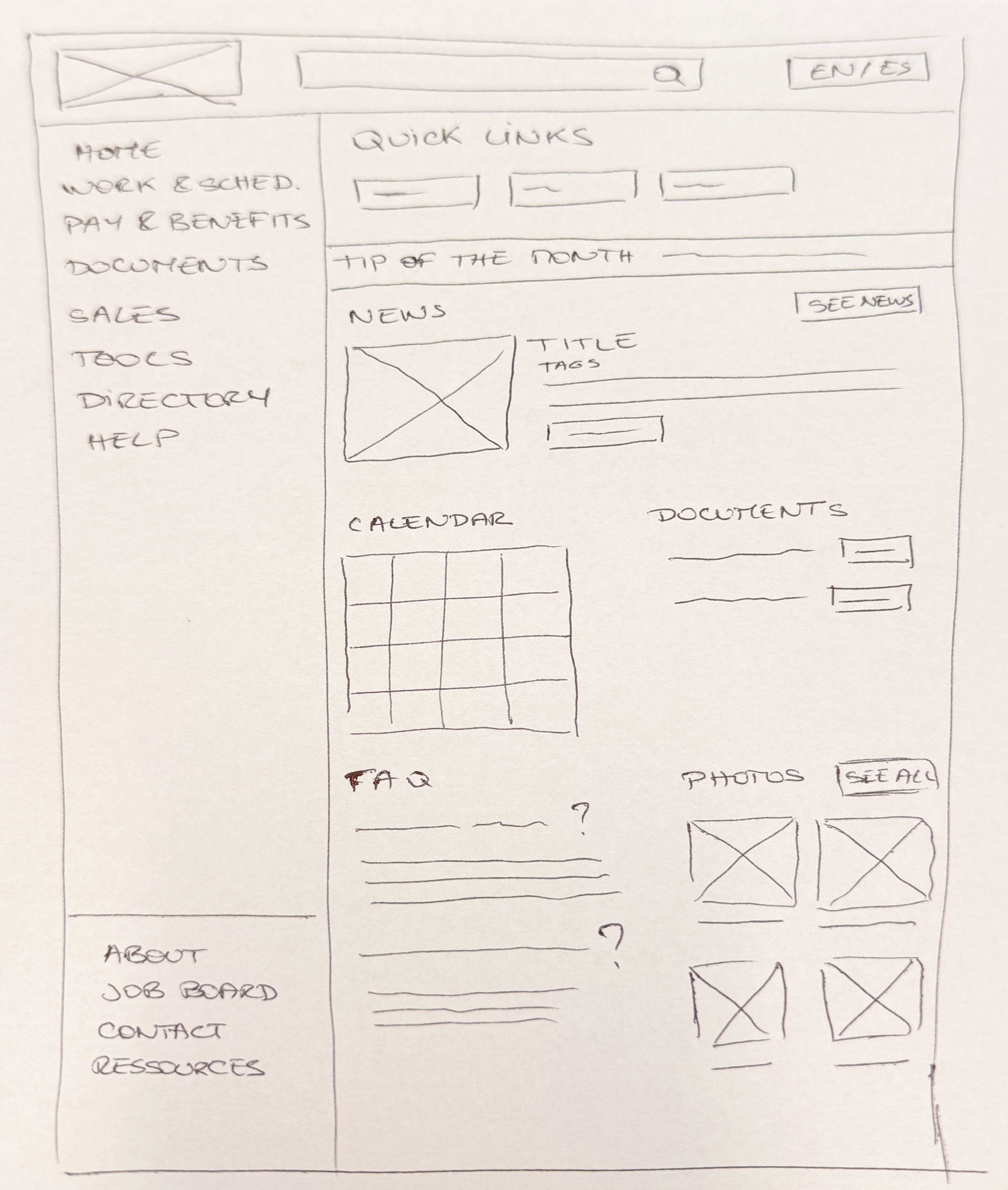
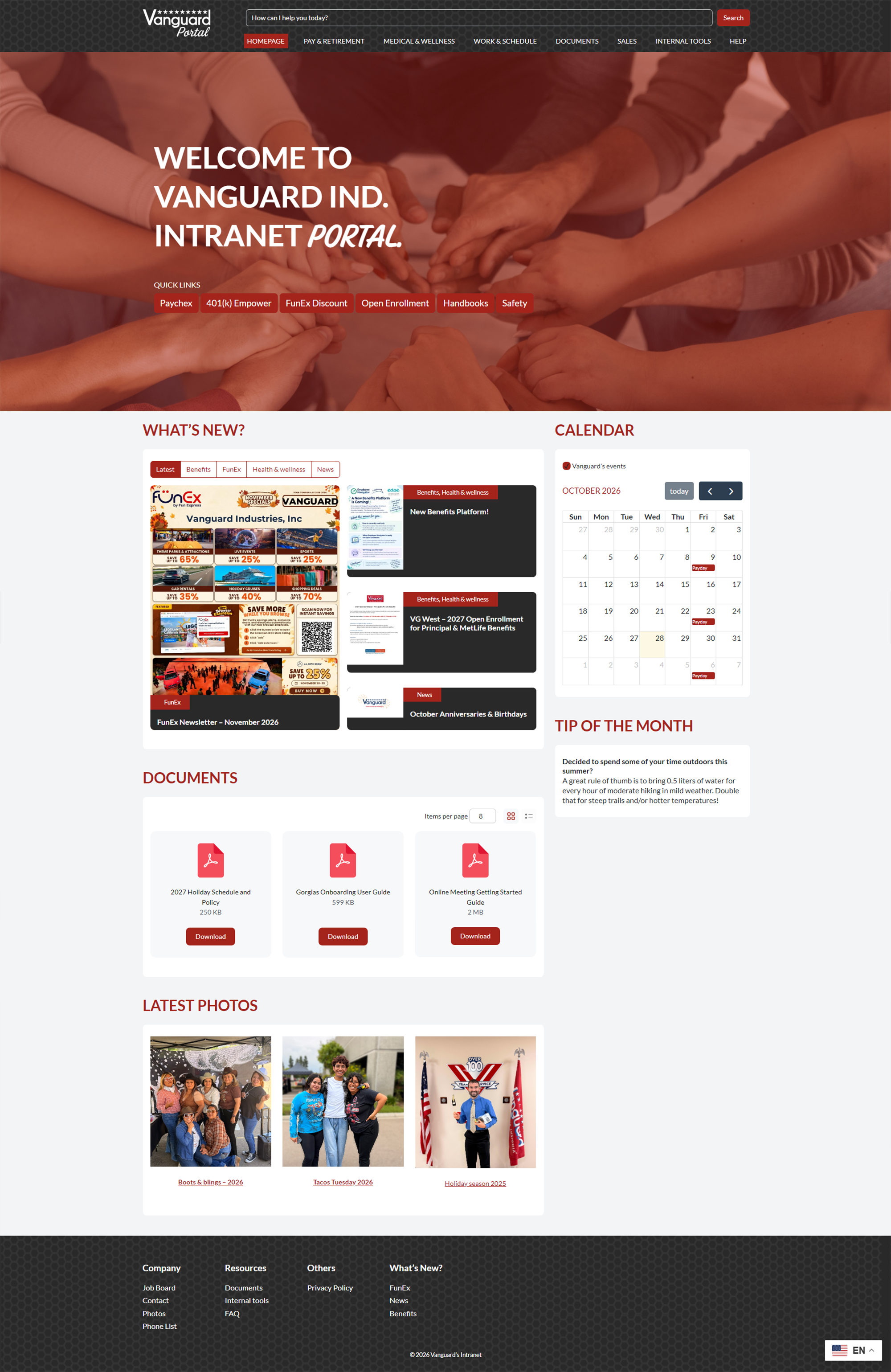
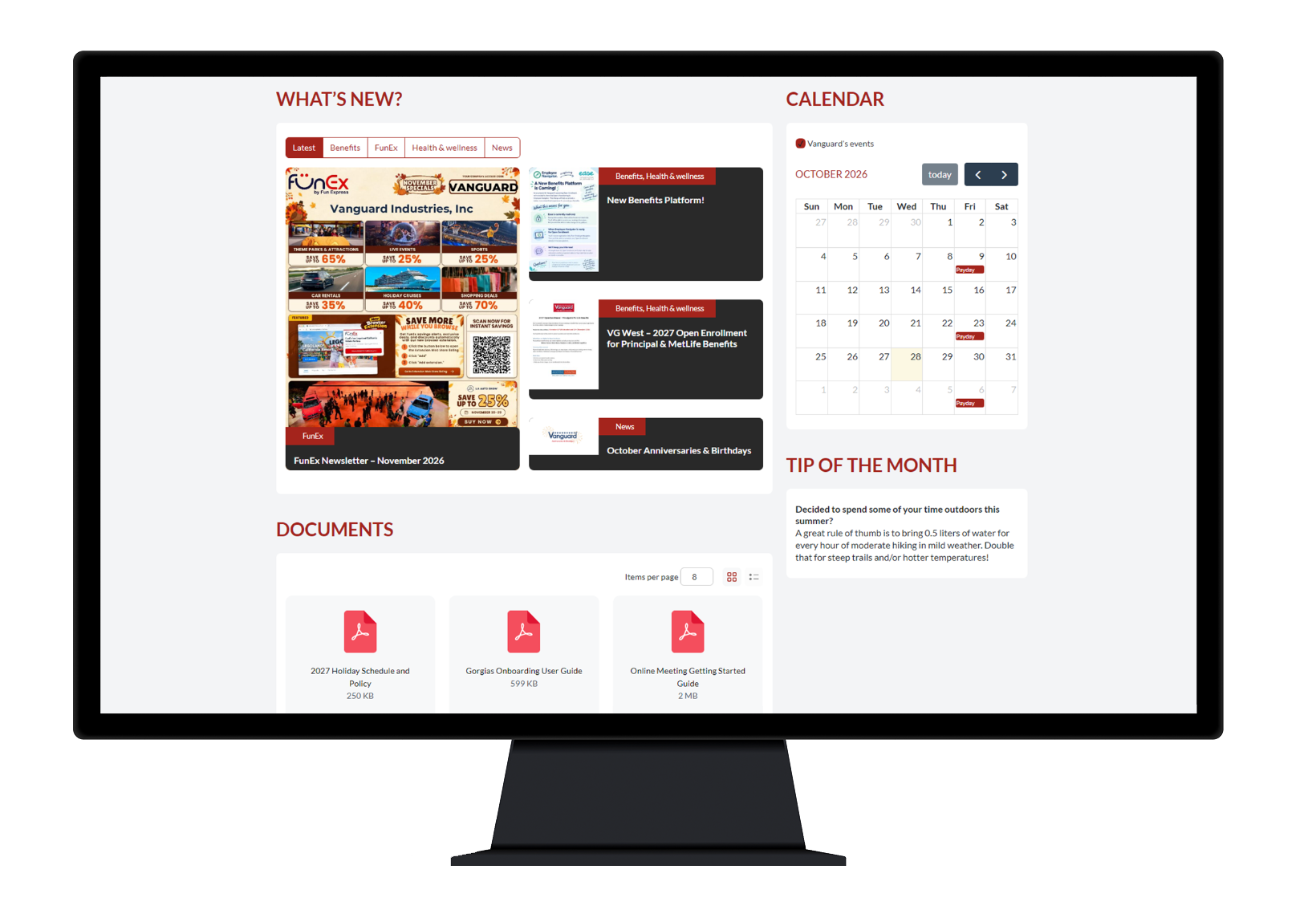
The final screens
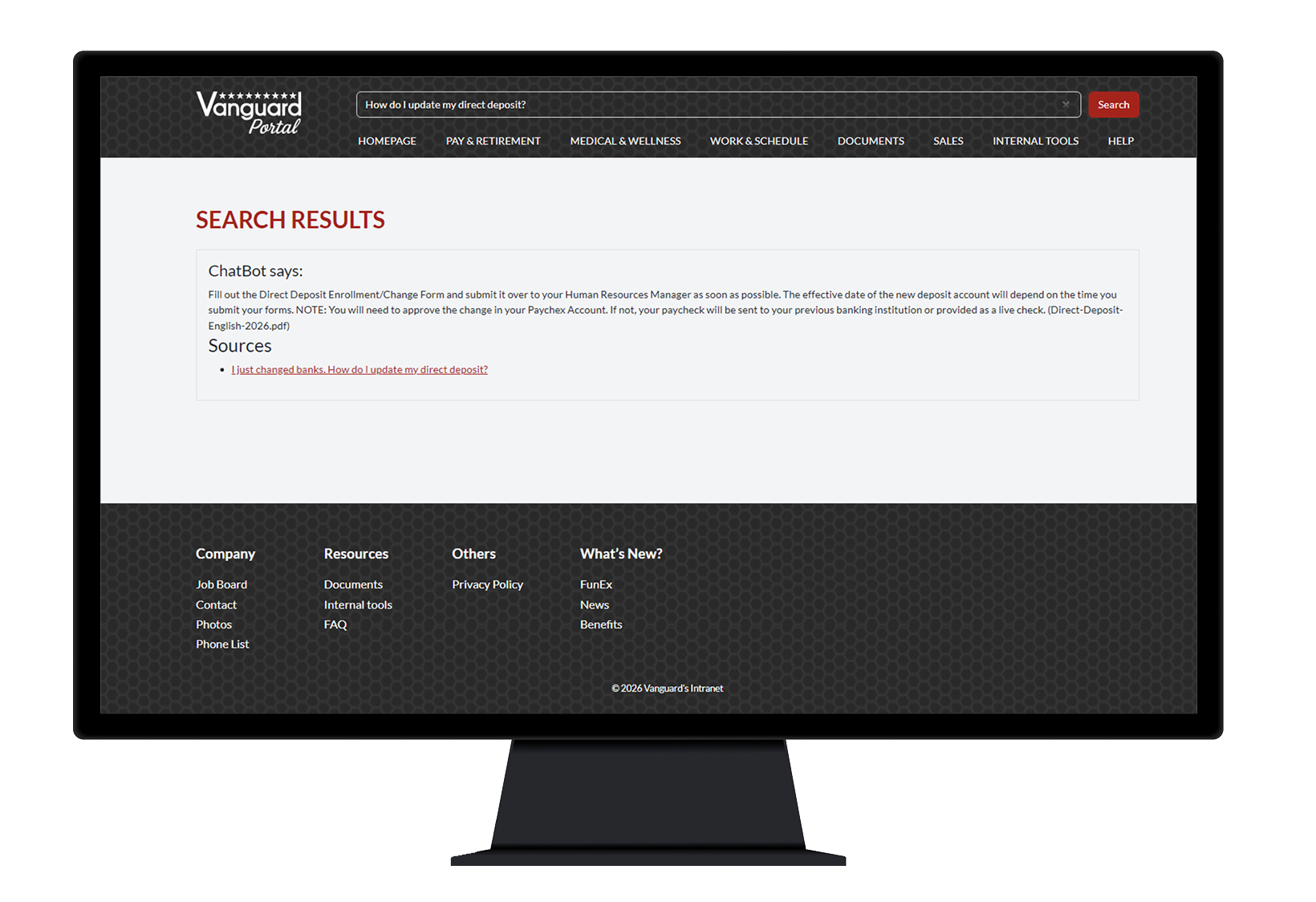
Under the hood
The intranet runs on WordPress, with a custom plugin I developed for the assistant. The assistant uses Ollama and AnythingLLM, has no internet access, and its knowledge is refreshed by a scheduled daily process that reads the site’s content and files.
Results
HR is happy with the results and now maintains the site independently. I have not yet measured visits or how the assistant is used; tracking both is my next step.
What I would do next
- Track what employees ask the assistant, and which questions it cannot answer, to improve the content.
Reflection
I learned two things. The survey did not reach warehouse employees well, even with manager support, break-room posters, and personal follow-ups, so on future projects I stress the importance of participation to managers and employees from the start. And dropping the interactive directory showed me that a design only works if the people who maintain it can keep it going. The project was also put on hold after the survey and restarted in June 2026, which taught me patience.